VW GTI Generations & Fitment Guide: Mk5, Mk6, Mk7, Mk7.5 & Mk8 by Year
Which GTI do you have, and what parts actually fit it? A plain-English fitment reference for the Mk5–Mk8 VW GTI — years, platforms, engines, bolt patterns, and where each generation's parts diverge.
Parts Covered in This Guide
Aero and personalization
VW GTI owners
| # | Product | Owner Reviews | Availability | Best For | |
|---|---|---|---|---|---|
| 1 | 11 | $26.99 In Stock at Amazon | Aero and personalization | Buy on Amazon
Prime Eligible
| |
| 2 | 2 | $29.99 In Stock at Amazon | VW GTI owners |
Shopping used or OEM? Try eBay Motors
Live listings for the parts covered in this guide — prices set by the seller.
“Will this fit my GTI?” is the single most important question before you buy a part — and the answer almost always depends on which generation you own. VW has built the modern turbocharged GTI across five generations now, on two different platforms, with three different engine families. Get the generation right and shopping is easy; get it wrong and you’re returning a bumper or a downpipe that was never going to bolt on.
This is your fitment map. Find your car below, learn what it shares with its siblings, then jump into the right parts category knowing what actually fits.
The quick version
The generation lineup and engine families below track Wikipedia’s Volkswagen Golf GTI entry (global factory outputs: Mk5’s 2.0 TFSI at 197 hp, Mk6’s TSI at 211 hp, Mk7 at 207–220 hp, Mk7.5 at 230–247 hp, Mk8 up to 241 hp); US-market model years, trims, and ratings can differ from the global launch figures, so confirm against your VIN and window sticker.
| Generation | US model years | Platform | Engine family |
|---|---|---|---|
| Mk5 | 2006–2009 | PQ35 | EA113 2.0T FSI |
| Mk6 | 2010–2014 | PQ35 | EA888 Gen1 2.0T |
| Mk7 | 2015–2017 | MQB | EA888 Gen3 2.0T |
| Mk7.5 | 2018–2021 | MQB | EA888 Gen3 (revised) |
| Mk8 | 2022–present | MQB Evo | EA888 evo4 2.0T |
Two big fault lines to remember: the PQ35 → MQB platform jump between Mk6 and Mk7 (chassis, suspension geometry, and many body parts change), and the EA113 → EA888 engine jump between Mk5 and Mk6 (intakes, downpipes, and tuning all differ). Within each platform, parts share far more than they diverge.
The good news that spans all of them: every GTI here runs a 5x112mm bolt pattern with a 57.1mm hub bore, so wheels and tires cross over readily — offset and brake clearance are what you match, not the pattern.
Mk5 (2006–2009) — the modern GTI’s starting line
The Mk5 brought the turbocharged 2.0T FSI (EA113) and the DSG dual-clutch to the GTI, and it’s still a favorite of enthusiasts who want an analog-feeling hot hatch. It rides on the PQ35 platform it shares with the Mk6.
- Engine notes: EA113 2.0T FSI. Intakes, downpipes, and diverter valves are EA113-specific — don’t cross-shop Mk6+ EA888 parts.
- Shares with: Mk6 (same platform, much suspension and chassis hardware carries across).
- Best value used: OEM take-offs are thinning but findable. Lean on eBay Motors for original bumpers, lights, and interior trim.
Building a Mk5? Start with suspension and brakes — the chassis responds beautifully to a sensible drop and better pads. See the suspension buyer’s guide for spring-vs-coilover thinking that applies to every generation.
Mk6 (2010–2014) — the refined PQ35
The Mk6 kept the PQ35 bones but switched to the EA888 Gen1 engine and cleaned up the styling, refinement, and interior. It’s arguably the sweet spot for cheap, plentiful parts today.
- Engine notes: EA888 Gen1 2.0T. This is where the modern intake/intercooler/downpipe ecosystem begins — but it’s still distinct from the Mk7’s Gen3.
- Shares with: Mk5 on the chassis side; NOT with Mk7 (different platform).
- Best value used: Excellent. Big production numbers mean deep salvage and take-off pools on eBay Motors.
The Mk6 loves bolt-ons. Browse exhaust, engine performance, and forced induction parts, and read the performance upgrade path before you spend.
Mk7 (2015–2017) — the MQB revolution
The Mk7 is the big one: an all-new MQB platform, the EA888 Gen3 engine, and the arrival of the Performance Package (bigger brakes, a limited-slip diff on so-equipped cars). This is where the largest modern aftermarket lives.
- Engine notes: EA888 Gen3. The deepest catalog of intakes, intercoolers, downpipes, and tunes of any GTI.
- Package watch: Performance Package cars use larger front rotors — confirm rotor size before buying brake parts. See best GTI brake upgrades.
- Shares with: Mk7.5 (facelift of the same car) — brakes, suspension, wheels, exhaust, and most interior parts interchange.
Almost everything in our turbo and bolt-on top list targets this chassis first. Dressing it up? The exterior accessories roundup is Mk7-friendly.
Mk7.5 (2018–2021) — the facelift
Mechanically a Mk7, cosmetically refreshed. LED headlights became standard, bumpers and taillights were revised, and a digital cockpit arrived. If you’re shopping mechanical or chassis parts, treat it as a Mk7; if you’re shopping front bumper, headlights, taillights, or infotainment, match the exact 7.5 year.
- Lighting note: Because LED became standard here, lighting upgrades differ from early Mk7 halogen cars — see choosing GTI LED headlights.
- Shares with: Mk7 for nearly all mechanical, brake, suspension, and wheel parts.
Mk8 (2022–present) — fully digital
The current GTI updates the MQB platform (MQB Evo) and moves to the EA888 evo4. The dash is fully digital, the styling is sharper, and the aftermarket is maturing fast but is still younger than the Mk7’s.
- Engine notes: EA888 evo4 — buy forced-induction and tuning parts specifically for the Mk8; earlier Gen3 parts do not carry over.
- Best value used: Emerging. New parts dominate today; used OEM take-offs are just starting to appear on eBay Motors.
Fitment by category — where generations diverge
- Brakes: Rotor sizes vary by generation and by Performance Package. Confirm rotor diameter before ordering pads or rotors.
- Suspension: The PQ35 (Mk5/Mk6) and MQB (Mk7+) use different geometry and mounting — springs and coilovers are platform-specific.
- Wheels & tires: 5x112 / 57.1mm across the board; match offset (ET) and diameter, and mind big-brake clearance.
- Exhaust & forced induction: Tied to the engine family (EA113 vs EA888 Gen1 vs Gen3 vs evo4). Buy to your exact chassis.
- Engine performance: Intakes and tunes are engine-specific — never assume a Mk6 part fits a Mk7.
- Exterior & lighting: The most year-sensitive parts. Facelifts (Mk7 vs Mk7.5) change bumpers and lights even within a generation.
- Interior & maintenance: Trim is often generation-specific; fluids and service intervals track the engine family.
How to buy the right part
- Confirm your generation and year using the table above and your VIN.
- Check for the Performance Package if you’re buying brakes or a diff-related part.
- New parts and accessories: Amazon Automotive — start in the matching category.
- Used, OEM, salvage, or rare take-offs: eBay Motors, via the generation-specific search buttons above. eBay is where the deep OEM pools live, and listing prices are shown live.
Nail the generation first and every other decision on this site gets easier. Bookmark this page, then dive into the buyer’s guides and category pages for your exact GTI.
Recommended Parts for This Guide
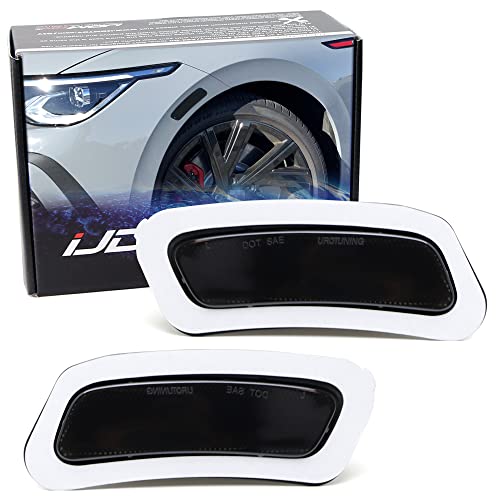
iJDMTOY Black Smoked Reflective Lens Front Bumper Side Marker Lens Compatible With Volkswagen 2022-up MK8 Golf/GTI, Replace OEM Amber Reflector Assy
11 owner reviews
iJDMTOY Black Smoked Reflective Lens Front Bumper Side Marker Lens Compatible With Volkswagen 2022-up MK8 Golf/GTI, Replace OEM Amber Reflector Assy. Sharpen the look of your GTI with this bolt-on aero and styling upgrade.
- Sharpens the look
- Durable, track-ready build

Custom Cobb Mount for Volkswagen Golf 2015-2021 GTI MK7 defrost Vent
2 owner reviews
Custom Cobb Mount for Volkswagen Golf 2015-2021 GTI MK7 defrost Vent. A quality upgrade or replacement part for your VW GTI.
- Fits VW GTI
- Quality build
Frequently Asked Questions
How do I tell which GTI generation I have?
Will Mk7 parts fit a Mk7.5 GTI?
What bolt pattern and hub bore does the GTI use?
Do all GTIs use the same 2.0T engine?
Which GTI generation is easiest to find cheap used parts for?
Keep reading & where to buy
Ready to shop the parts covered here? These category pages carry the current Amazon listings plus a live eBay Motors search for used and OEM.
Related GTI guides
- Best GTI Brake Upgrades: Pads, Rotors & Big-Brake Kits
- GTI Brake Pad Types Explained: Street, Track & Endurance
- GTI Brake Rotors Explained: Blank vs. Slotted vs. Drilled
- VW GTI Performance Package Explained: Bigger Brakes & the VAQ Diff
- GTI Suspension Guide: Springs vs. Coilovers & Sway Bars
- VW GTI Wheel & Tire Fitment Guide